Clear Aligners vs. Braces: Which Orthodontic Option Is Right for You?
Clear Aligners vs. Braces: Which Orthodontic Option Is Right for You?
Choosing the right orthodontic treatment is an important step toward achieving a healthier, more confident smile. Today, patients typically decide between two popular options: clear aligners and traditional braces. While both are effective, each option offers distinct benefits depending on your lifestyle, goals, and orthodontic needs.
Understanding the key differences between clear aligners and braces can help you make an informed and confident decision.
What Are Clear Aligners?
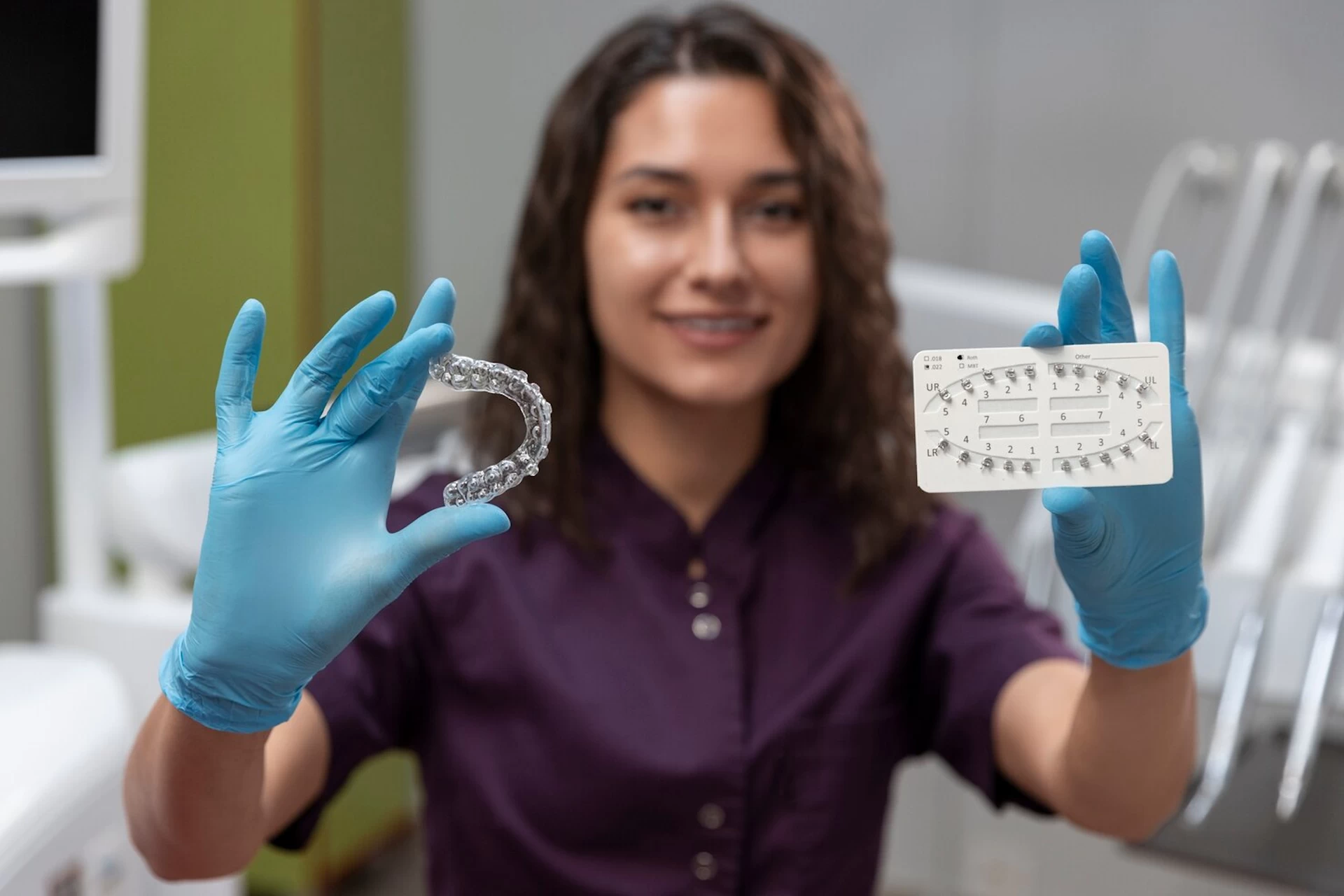
Clear aligners are custom-made, transparent trays designed to gradually straighten teeth. They fit snugly over your teeth and apply gentle pressure to move them into proper alignment over time.
Because they are nearly invisible and removable, clear aligners are a popular choice among adults and teens who want a discreet orthodontic solution without the appearance of metal braces.
What Are Traditional Braces?
Traditional braces use metal or ceramic brackets attached to the teeth and connected by wires. These components work together to apply continuous pressure, gradually shifting teeth into their correct positions.
Although braces are more noticeable, they have been used successfully for decades and are highly effective for treating complex orthodontic cases.
Appearance: Discreet vs. Noticeable
One of the most obvious differences between clear aligners and braces is appearance. Clear aligners are virtually invisible, making them ideal for patients who want to straighten their teeth discreetly.
In contrast, braces are more visible, even when ceramic options are used. For patients who are not concerned about aesthetics, this may not be a deciding factor. However, for many professionals and image-conscious individuals, clear aligners offer a significant advantage.
Comfort and Daily Experience
Comfort is another important consideration. Clear aligners are made from smooth plastic, which reduces irritation to the gums and cheeks. Additionally, there are no wires or brackets that can break or poke the mouth.
On the other hand, braces may cause temporary discomfort after adjustments and can sometimes irritate the soft tissues. While this is manageable, it may require a short adjustment period.
Convenience and Lifestyle Flexibility
Clear aligners offer unmatched convenience. Since they are removable, patients can eat freely and maintain their regular oral hygiene routine. Brushing and flossing are simple, and there are no food restrictions.
Braces, however, require more care. Certain foods must be avoided, and cleaning around brackets and wires can be more time-consuming. Nevertheless, braces remain a reliable option for patients who prefer a fixed treatment that does not require daily removal.
Effectiveness and Treatment Complexity
Both clear aligners and braces are effective orthodontic treatments. Clear aligners work well for mild to moderate alignment issues such as spacing, crowding, and bite problems.
However, braces are often recommended for more complex cases, including severe misalignment or significant bite corrections. Your orthodontist will determine which option is best based on your specific needs.
Treatment Time and Office Visits
Treatment time varies depending on the individual case. In many situations, clear aligner treatment can be completed in a similar or shorter timeframe than braces, provided aligners are worn as directed.
Additionally, clear aligners often require fewer in-office visits. Braces, by comparison, typically involve regular adjustments and more frequent appointments.
Which Option Is Right for You?
Ultimately, the best orthodontic option depends on your goals, lifestyle, and dental condition. If you value discretion, comfort, and flexibility, clear aligners may be the ideal choice. If your case is more complex or you prefer a fixed solution, traditional braces may be the better option.
A professional orthodontic consultation is the best way to determine which treatment will deliver the safest and most effective results for your smile.
Make a Confident Choice for Your Smile
In conclusion, both clear aligners and braces offer proven paths to straighter teeth and improved oral health. By understanding the differences, benefits, and limitations of each option, you can confidently choose the treatment that fits your lifestyle and long-term goals.
This mode enables people with epilepsy to use the website safely by eliminating the risk of seizures that result from flashing or blinking animations and risky color combinations.
Visually Impaired Mode
Improves website's visuals
This mode adjusts the website for the convenience of users with visual impairments such as Degrading Eyesight, Tunnel Vision, Cataract, Glaucoma, and others.
Cognitive Disability Mode
Helps to focus on specific content
This mode provides different assistive options to help users with cognitive impairments such as Dyslexia, Autism, CVA, and others, to focus on the essential elements of the website more easily.
ADHD Friendly Mode
Reduces distractions and improve focus
This mode helps users with ADHD and Neurodevelopmental disorders to read, browse, and focus on the main website elements more easily while significantly reducing distractions.
Blindness Mode
Allows using the site with your screen-reader
This mode configures the website to be compatible with screen-readers such as JAWS, NVDA, VoiceOver, and TalkBack. A screen-reader is software for blind users that is installed on a computer and smartphone, and websites must be compatible with it.
Online Dictionary
Readable Experience
Content Scaling
Default
Text Magnifier
Readable Font
Dyslexia Friendly
Highlight Titles
Highlight Links
Font Sizing
Default
Line Height
Default
Letter Spacing
Default
Left Aligned
Center Aligned
Right Aligned
Visually Pleasing Experience
Dark Contrast
Light Contrast
Monochrome
High Contrast
High Saturation
Low Saturation
Adjust Text Colors
Adjust Title Colors
Adjust Background Colors
Easy Orientation
Mute Sounds
Hide Images
Hide Emoji
Reading Guide
Stop Animations
Reading Mask
Highlight Hover
Highlight Focus
Big Dark Cursor
Big Light Cursor
Cognitive Reading
Virtual Keyboard
Navigation Keys
Voice Navigation
Accessibility Statement
synergyindentistry.com
August 31, 2026
Compliance status
We firmly believe that the internet should be available and accessible to anyone, and are committed to providing a website that is accessible to the widest possible audience,
regardless of circumstance and ability.
To fulfill this, we aim to adhere as strictly as possible to the World Wide Web Consortium’s (W3C) Web Content Accessibility Guidelines 2.1 (WCAG 2.1) at the AA level.
These guidelines explain how to make web content accessible to people with a wide array of disabilities. Complying with those guidelines helps us ensure that the website is accessible
to all people: blind people, people with motor impairments, visual impairment, cognitive disabilities, and more.
This website utilizes various technologies that are meant to make it as accessible as possible at all times. We utilize an accessibility interface that allows persons with specific
disabilities to adjust the website’s UI (user interface) and design it to their personal needs.
Additionally, the website utilizes an AI-based application that runs in the background and optimizes its accessibility level constantly. This application remediates the website’s HTML,
adapts Its functionality and behavior for screen-readers used by the blind users, and for keyboard functions used by individuals with motor impairments.
If you’ve found a malfunction or have ideas for improvement, we’ll be happy to hear from you. You can reach out to the website’s operators by using the following email
Screen-reader and keyboard navigation
Our website implements the ARIA attributes (Accessible Rich Internet Applications) technique, alongside various different behavioral changes, to ensure blind users visiting with
screen-readers are able to read, comprehend, and enjoy the website’s functions. As soon as a user with a screen-reader enters your site, they immediately receive
a prompt to enter the Screen-Reader Profile so they can browse and operate your site effectively. Here’s how our website covers some of the most important screen-reader requirements,
alongside console screenshots of code examples:
Screen-reader optimization: we run a background process that learns the website’s components from top to bottom, to ensure ongoing compliance even when updating the website.
In this process, we provide screen-readers with meaningful data using the ARIA set of attributes. For example, we provide accurate form labels;
descriptions for actionable icons (social media icons, search icons, cart icons, etc.); validation guidance for form inputs; element roles such as buttons, menus, modal dialogues (popups),
and others. Additionally, the background process scans all the website’s images and provides an accurate and meaningful image-object-recognition-based description as an ALT (alternate text) tag
for images that are not described. It will also extract texts that are embedded within the image, using an OCR (optical character recognition) technology.
To turn on screen-reader adjustments at any time, users need only to press the Alt+1 keyboard combination. Screen-reader users also get automatic announcements to turn the Screen-reader mode on
as soon as they enter the website.
These adjustments are compatible with all popular screen readers, including JAWS and NVDA.
Keyboard navigation optimization: The background process also adjusts the website’s HTML, and adds various behaviors using JavaScript code to make the website operable by the keyboard. This includes the ability to navigate the website using the Tab and Shift+Tab keys, operate dropdowns with the arrow keys, close them with Esc, trigger buttons and links using the Enter key, navigate between radio and checkbox elements using the arrow keys, and fill them in with the Spacebar or Enter key.Additionally, keyboard users will find quick-navigation and content-skip menus, available at any time by clicking Alt+1, or as the first elements of the site while navigating with the keyboard. The background process also handles triggered popups by moving the keyboard focus towards them as soon as they appear, and not allow the focus drift outside it.
Users can also use shortcuts such as “M” (menus), “H” (headings), “F” (forms), “B” (buttons), and “G” (graphics) to jump to specific elements.
Disability profiles supported in our website
Epilepsy Safe Mode: this profile enables people with epilepsy to use the website safely by eliminating the risk of seizures that result from flashing or blinking animations and risky color combinations.
Visually Impaired Mode: this mode adjusts the website for the convenience of users with visual impairments such as Degrading Eyesight, Tunnel Vision, Cataract, Glaucoma, and others.
Cognitive Disability Mode: this mode provides different assistive options to help users with cognitive impairments such as Dyslexia, Autism, CVA, and others, to focus on the essential elements of the website more easily.
ADHD Friendly Mode: this mode helps users with ADHD and Neurodevelopmental disorders to read, browse, and focus on the main website elements more easily while significantly reducing distractions.
Blindness Mode: this mode configures the website to be compatible with screen-readers such as JAWS, NVDA, VoiceOver, and TalkBack. A screen-reader is software for blind users that is installed on a computer and smartphone, and websites must be compatible with it.
Keyboard Navigation Profile (Motor-Impaired): this profile enables motor-impaired persons to operate the website using the keyboard Tab, Shift+Tab, and the Enter keys. Users can also use shortcuts such as “M” (menus), “H” (headings), “F” (forms), “B” (buttons), and “G” (graphics) to jump to specific elements.
Additional UI, design, and readability adjustments
Font adjustments – users, can increase and decrease its size, change its family (type), adjust the spacing, alignment, line height, and more.
Color adjustments – users can select various color contrast profiles such as light, dark, inverted, and monochrome. Additionally, users can swap color schemes of titles, texts, and backgrounds, with over seven different coloring options.
Animations – person with epilepsy can stop all running animations with the click of a button. Animations controlled by the interface include videos, GIFs, and CSS flashing transitions.
Content highlighting – users can choose to emphasize important elements such as links and titles. They can also choose to highlight focused or hovered elements only.
Audio muting – users with hearing devices may experience headaches or other issues due to automatic audio playing. This option lets users mute the entire website instantly.
Cognitive disorders – we utilize a search engine that is linked to Wikipedia and Wiktionary, allowing people with cognitive disorders to decipher meanings of phrases, initials, slang, and others.
Additional functions – we provide users the option to change cursor color and size, use a printing mode, enable a virtual keyboard, and many other functions.
Browser and assistive technology compatibility
We aim to support the widest array of browsers and assistive technologies as possible, so our users can choose the best fitting tools for them, with as few limitations as possible. Therefore, we have worked very hard to be able to support all major systems that comprise over 95% of the user market share including Google Chrome, Mozilla Firefox, Apple Safari, Opera and Microsoft Edge, JAWS and NVDA (screen readers).
Notes, comments, and feedback
Despite our very best efforts to allow anybody to adjust the website to their needs. There may still be pages or sections that are not fully accessible, are in the process of becoming accessible, or are lacking an adequate technological solution to make them accessible. Still, we are continually improving our accessibility, adding, updating and improving its options and features, and developing and adopting new technologies. All this is meant to reach the optimal level of accessibility, following technological advancements. For any assistance, please reach out to
dental implants denver, Colorado
clear aligner denver, Colorado
night guards denver, Colorado
teeth whitening denver, Colorado
porcelain crowns denver, Colorado
oral surgery denver, Colorado
advanced 3d imaging denver, Colorado
composite restorations denver, Colorado
root canal therapy denver, Colorado
periodontal maintenance denver, Colorado
sleep apnea devices denver, Colorado
facial aesthetic treatments denver, Colorado
dentist denver, Colorado
dental clinic denver, Coloradocosmetic veneers englewood, Colorado
dental implants englewood, Colorado
clear aligner englewood, Colorado
night guards englewood, Colorado
teeth whitening englewood, Colorado
porcelain crowns englewood, Colorado
oral surgery englewood, Colorado
advanced 3d imaging englewood, Colorado
composite restorations englewood, Colorado
root canal therapy englewood, Colorado
periodontal maintenance englewood, Colorado
sleep apnea devices englewood, Colorado
facial aesthetic treatments englewood, Colorado
dentist englewood, Colorado
dental clinic englewood, Coloradocosmetic veneers littleton, Colorado
dental implants littleton, Colorado
clear aligner littleton, Colorado
night guards littleton, Colorado
teeth whitening littleton, Colorado
porcelain crowns littleton, Colorado
oral surgery littleton, Colorado
advanced 3d imaging littleton, Colorado
composite restorations littleton, Colorado
root canal therapy littleton, Colorado
periodontal maintenance littleton, Colorado
sleep apnea devices littleton, Colorado
facial aesthetic treatments littleton, Colorado
dentist littleton, Colorado
dental clinic littleton, Coloradocosmetic veneers wheat ridge, Colorado
dental implants wheat ridge, Colorado
clear aligner wheat ridge, Colorado
night guards wheat ridge, Colorado
teeth whitening wheat ridge, Colorado
porcelain crowns wheat ridge, Colorado
oral surgery wheat ridge, Colorado
advanced 3d imaging wheat ridge, Colorado
composite restorations wheat ridge, Colorado
root canal therapy wheat ridge, Colorado
periodontal maintenance wheat ridge, Colorado
sleep apnea devices wheat ridge, Colorado
facial aesthetic treatments wheat ridge, Colorado
dentist wheat ridge, Colorado
dental clinic wheat ridge, Coloradocosmetic veneers arvada, Colorado
dental implants arvada, Colorado
clear aligner arvada, Colorado
night guards arvada, Colorado
teeth whitening arvada, Colorado
porcelain crowns arvada, Colorado
oral surgery arvada, Colorado
advanced 3d imaging arvada, Colorado
composite restorations arvada, Colorado
root canal therapy arvada, Colorado
periodontal maintenance arvada, Colorado
sleep apnea devices arvada, Colorado
facial aesthetic treatments arvada, Colorado
dentist arvada, Colorado
dental clinic arvada, Coloradocosmetic veneers golden, Colorado
dental implants golden, Colorado
clear aligner golden, Colorado
night guards golden, Colorado
teeth whitening golden, Colorado
porcelain crowns golden, Colorado
oral surgery golden, Colorado
advanced 3d imaging golden, Colorado
composite restorations golden, Colorado
root canal therapy golden, Colorado
periodontal maintenance golden, Colorado
sleep apnea devices golden, Colorado
facial aesthetic treatments golden, Colorado
dentist golden, Colorado
dental clinic golden, Coloradocosmetic veneers morrison, Colorado
dental implants morrison, Colorado
clear aligner morrison, Colorado
night guards morrison, Colorado
teeth whitening morrison, Colorado
porcelain crowns morrison, Colorado
oral surgery morrison, Colorado
advanced 3d imaging morrison, Colorado
composite restorations morrison, Colorado
root canal therapy morrison, Colorado
periodontal maintenance morrison, Colorado
sleep apnea devices morrison, Colorado
facial aesthetic treatments morrison, Colorado
dentist morrison, Colorado
dental clinic morrison, Coloradocosmetic veneers sherrelwood, Colorado
dental implants sherrelwood, Colorado
clear aligner sherrelwood, Colorado
night guards sherrelwood, Colorado
teeth whitening sherrelwood, Colorado
porcelain crowns sherrelwood, Colorado
oral surgery sherrelwood, Colorado
advanced 3d imaging sherrelwood, Colorado
composite restorations sherrelwood, Colorado
root canal therapy sherrelwood, Colorado
periodontal maintenance sherrelwood, Colorado
sleep apnea devices sherrelwood, Colorado
facial aesthetic treatments sherrelwood, Colorado
dentist sherrelwood, Colorado
dental clinic sherrelwood, Coloradocosmetic veneers federal heights, Colorado
dental implants federal heights, Colorado
clear aligner federal heights, Colorado
night guards federal heights, Colorado
teeth whitening federal heights, Colorado
porcelain crowns federal heights, Colorado
oral surgery federal heights, Colorado
advanced 3d imaging federal heights, Colorado
composite restorations federal heights, Colorado
root canal therapy federal heights, Colorado
periodontal maintenance federal heights, Colorado
sleep apnea devices federal heights, Colorado
facial aesthetic treatments federal heights, Colorado
dentist federal heights, Colorado
dental clinic federal heights, Coloradocosmetic veneers northglenn, Colorado
dental implants northglenn, Colorado
clear aligner northglenn, Colorado
night guards northglenn, Colorado
teeth whitening northglenn, Colorado
porcelain crowns northglenn, Colorado
oral surgery northglenn, Colorado
advanced 3d imaging northglenn, Colorado
composite restorations northglenn, Colorado
root canal therapy northglenn, Colorado
periodontal maintenance northglenn, Colorado
sleep apnea devices northglenn, Colorado
facial aesthetic treatments northglenn, Colorado
dentist northglenn, Colorado
dental clinic northglenn, Coloradocosmetic veneers edgewater, Colorado
dental implants edgewater, Colorado
clear aligner edgewater, Colorado
night guards edgewater, Colorado
teeth whitening edgewater, Colorado
porcelain crowns edgewater, Colorado
oral surgery edgewater, Colorado
advanced 3d imaging edgewater, Colorado
composite restorations edgewater, Colorado
root canal therapy edgewater, Colorado
periodontal maintenance edgewater, Colorado
sleep apnea devices edgewater, Colorado
facial aesthetic treatments edgewater, Colorado
dentist edgewater, Colorado
dental clinic edgewater, Coloradocosmetic veneers glendale, Colorado
dental implants glendale, Colorado
clear aligner glendale, Colorado
night guards glendale, Colorado
teeth whitening glendale, Colorado
porcelain crowns glendale, Colorado
oral surgery glendale, Colorado
advanced 3d imaging glendale, Colorado
composite restorations glendale, Colorado
root canal therapy glendale, Colorado
periodontal maintenance glendale, Colorado
sleep apnea devices glendale, Colorado
facial aesthetic treatments glendale, Colorado
dentist glendale, Colorado
dental clinic glendale, Coloradocosmetic veneers bow mar, Colorado
dental implants bow mar, Colorado
clear aligner bow mar, Colorado
night guards bow mar, Colorado
teeth whitening bow mar, Colorado
porcelain crowns bow mar, Colorado
oral surgery bow mar, Colorado
advanced 3d imaging bow mar, Colorado
composite restorations bow mar, Colorado
root canal therapy bow mar, Colorado
periodontal maintenance bow mar, Colorado
sleep apnea devices bow mar, Colorado
facial aesthetic treatments bow mar, Colorado
dentist bow mar, Colorado
dental clinic bow mar, Coloradocosmetic veneers southwest denver, Colorado
dental implants southwest denver, Colorado
clear aligner southwest denver, Colorado
night guards southwest denver, Colorado
teeth whitening southwest denver, Colorado
porcelain crowns southwest denver, Colorado
oral surgery southwest denver, Colorado
advanced 3d imaging southwest denver, Colorado
composite restorations southwest denver, Colorado
root canal therapy southwest denver, Colorado
periodontal maintenance southwest denver, Colorado
sleep apnea devices southwest denver, Colorado
facial aesthetic treatments southwest denver, Colorado
dentist southwest denver, Colorado
dental clinic southwest denver, Coloradocosmetic veneers commerce city, Colorado
dental implants commerce city, Colorado
clear aligner commerce city, Colorado
night guards commerce city, Colorado
teeth whitening commerce city, Colorado
porcelain crowns commerce city, Colorado
oral surgery commerce city, Colorado
advanced 3d imaging commerce city, Colorado
composite restorations commerce city, Colorado
root canal therapy commerce city, Colorado
periodontal maintenance commerce city, Colorado
sleep apnea devices commerce city, Colorado
facial aesthetic treatments commerce city, Colorado
dentist commerce city, Colorado
dental clinic commerce city, Coloradocosmetic veneers lakewood, Colorado
dental implants lakewood, Colorado
clear aligner lakewood, Colorado
night guards lakewood, Colorado
teeth whitening lakewood, Colorado
porcelain crowns lakewood, Colorado
oral surgery lakewood, Colorado
advanced 3d imaging lakewood, Colorado
composite restorations lakewood, Colorado
root canal therapy lakewood, Colorado
periodontal maintenance lakewood, Colorado
sleep apnea devices lakewood, Colorado
facial aesthetic treatments lakewood, Colorado
dentist lakewood, Colorado
dental clinic lakewood, Colorado
dental clinic near me
dentist near me
family dentist near me
cosmetic dentist near me
emergency dentist near me
pediatric dentist near me
teeth cleaning near me
dental implants near me
teeth whitening near me
invisalign near me
braces near me
root canal near me
tooth extraction near me
dental crowns near me
dental veneers near me
same day dentist near me
affordable dentist near me
walk in dentist near me
24 hour dentist near me
dental checkup near me